Knowledge Centre
Your trusted source for practical marine corrosion advice.
Explore practical resources designed to help you better understand marine corrosion, protect your vessel, and make informed decisions about corrosion protection. Browse expert videos and technical animations, access our technical guides and downloadable resources, and find answers to common questions about corrosion, troubleshooting, and MPS solutions.
Whether you're looking for practical guidance or need help with a specific corrosion issue, the Knowledge Centre is a great place to start.
Videos & Animations
See corrosion protection in action. Explore expert videos, product demonstrations, technical animations, and installation guides to better understand marine corrosion, cathodic protection, and MPS solutions—helping you make informed decisions to protect your vessel.
Learn how to improve corrosion control and protective coating performance whilst supporting a healthy marine biosphere.
Safe & Smart Boating Video Series
Marine Protection Systems and Pantaenius have partnered to create a series of educational videos covering marine corrosion protection, boating systems, engine safety, and best practices for safer, smarter boating. Explore the videos below and learn practical tips to help protect your vessel and enjoy greater peace of mind on the water.
Boating Systems Checklist
How to Test for Shore Power Isolation
Rigging and Surveying - What you Need to Know
How to test a Bonding System & Cathodic Protection
Marine Corrosion in Wooden Boats
Outboards - How to get the Best from your Boat
How to make a bonding connection
Marine Surveying - Protecting you and your Assets
Sail Drives - How to Maintain and get the Best Performance
Technical Library & Downloads
Access our library of technical guides, installation manuals, product datasheets, and downloadable resources designed to help you understand marine corrosion, select the right MPS solutions, and keep your vessel protected. Whether you're a boat owner, marine technician, or industry professional, you'll find practical information to support informed decisions and best practice. If you require any of the below as printable posters or data sheets please email our support team.
Information Guides
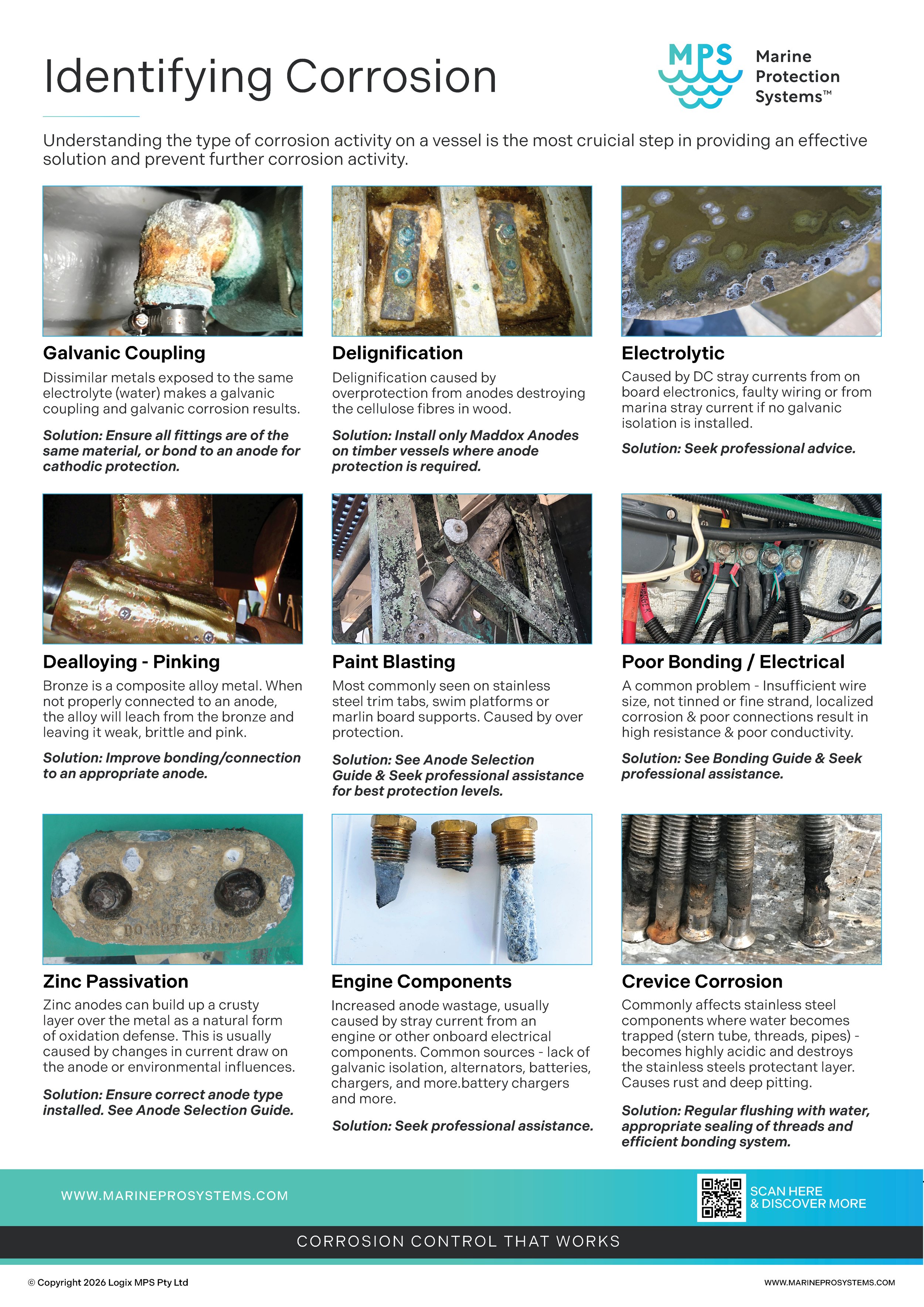
Identifying Corrosion

What Boat Owners Need To Know
Recommended Ranges for Cathodic Protection
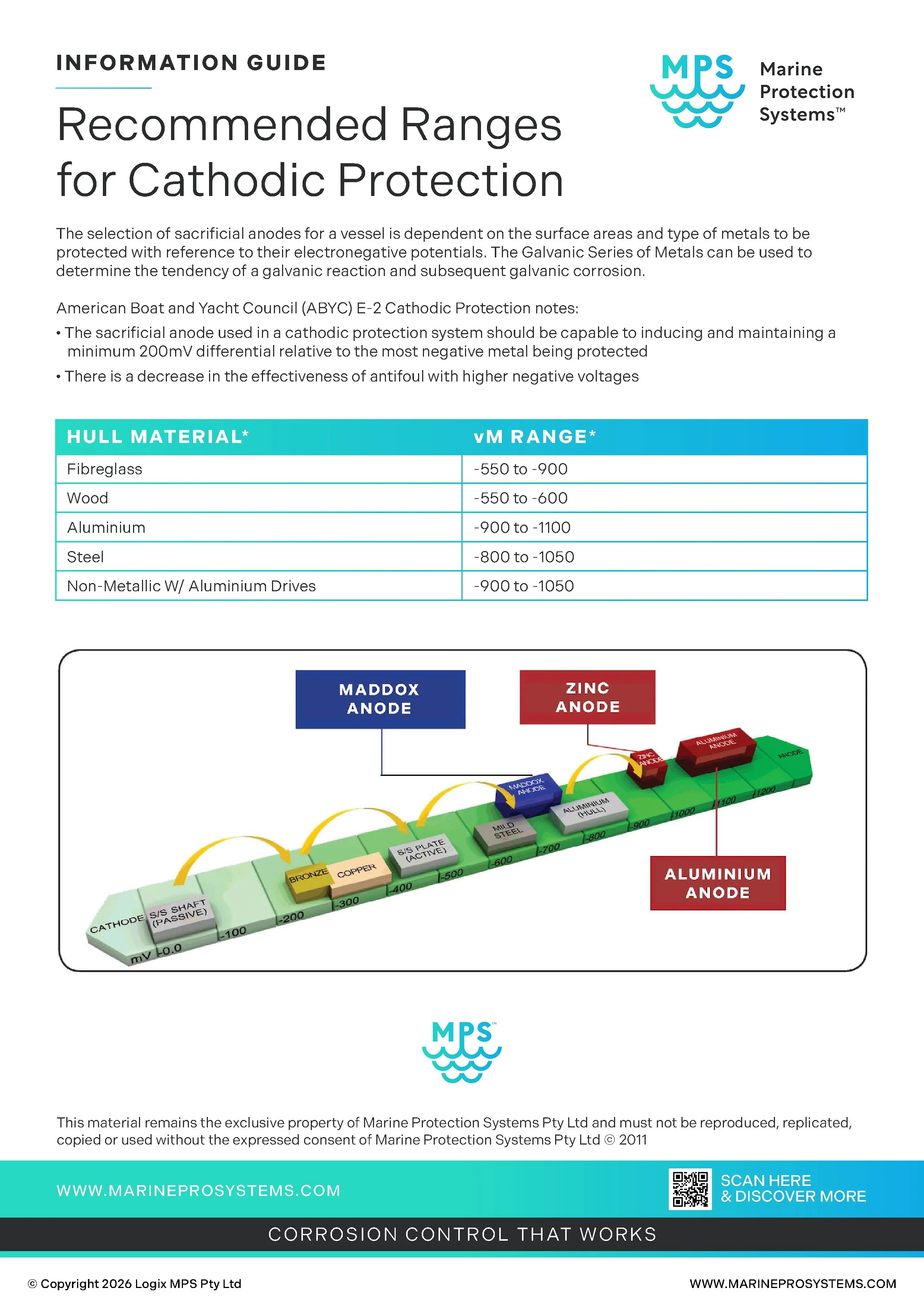
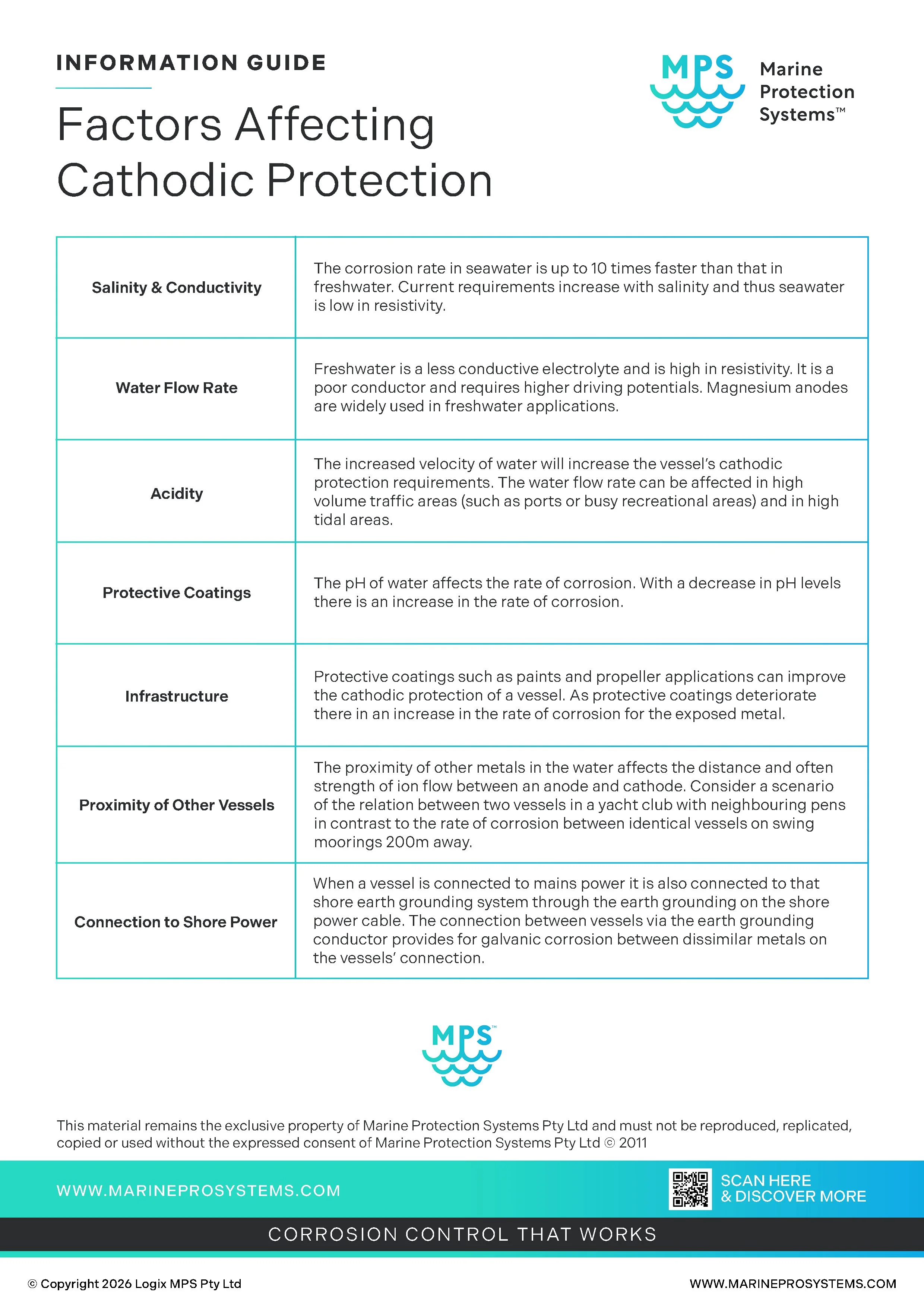
Factors Affecting Cathodic Protection
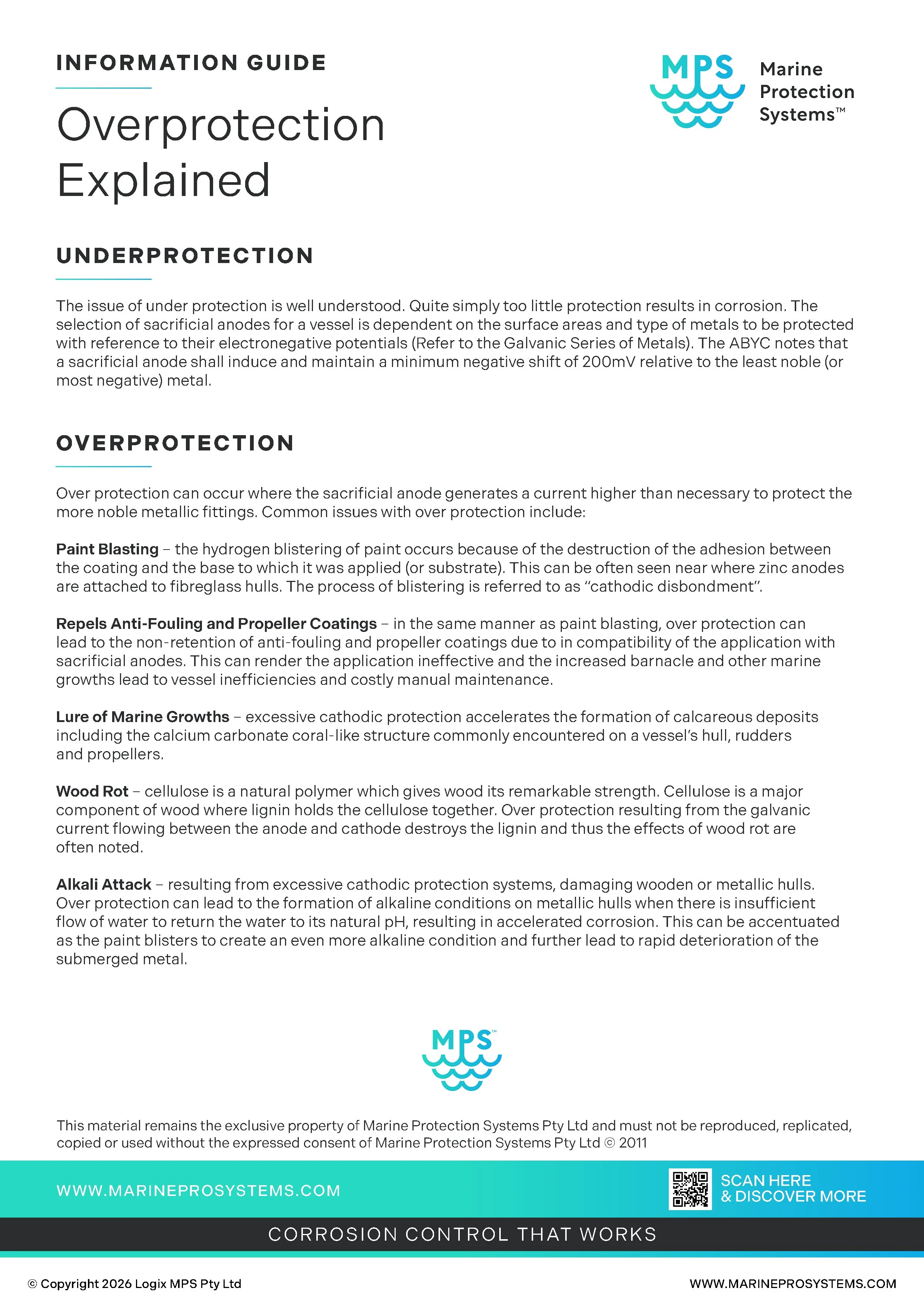
Overprotection Explained
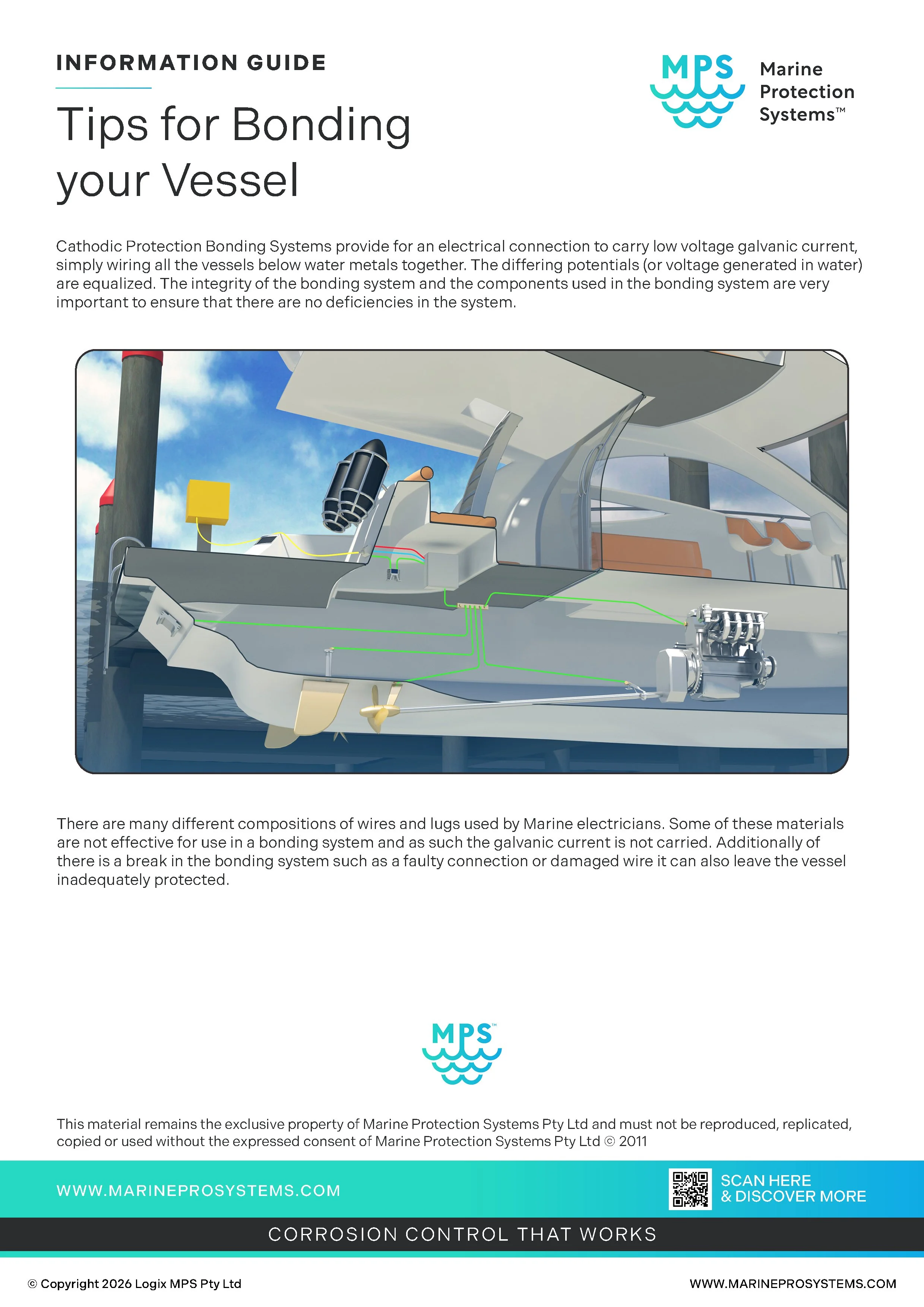
Tips for Bonding your Vessel
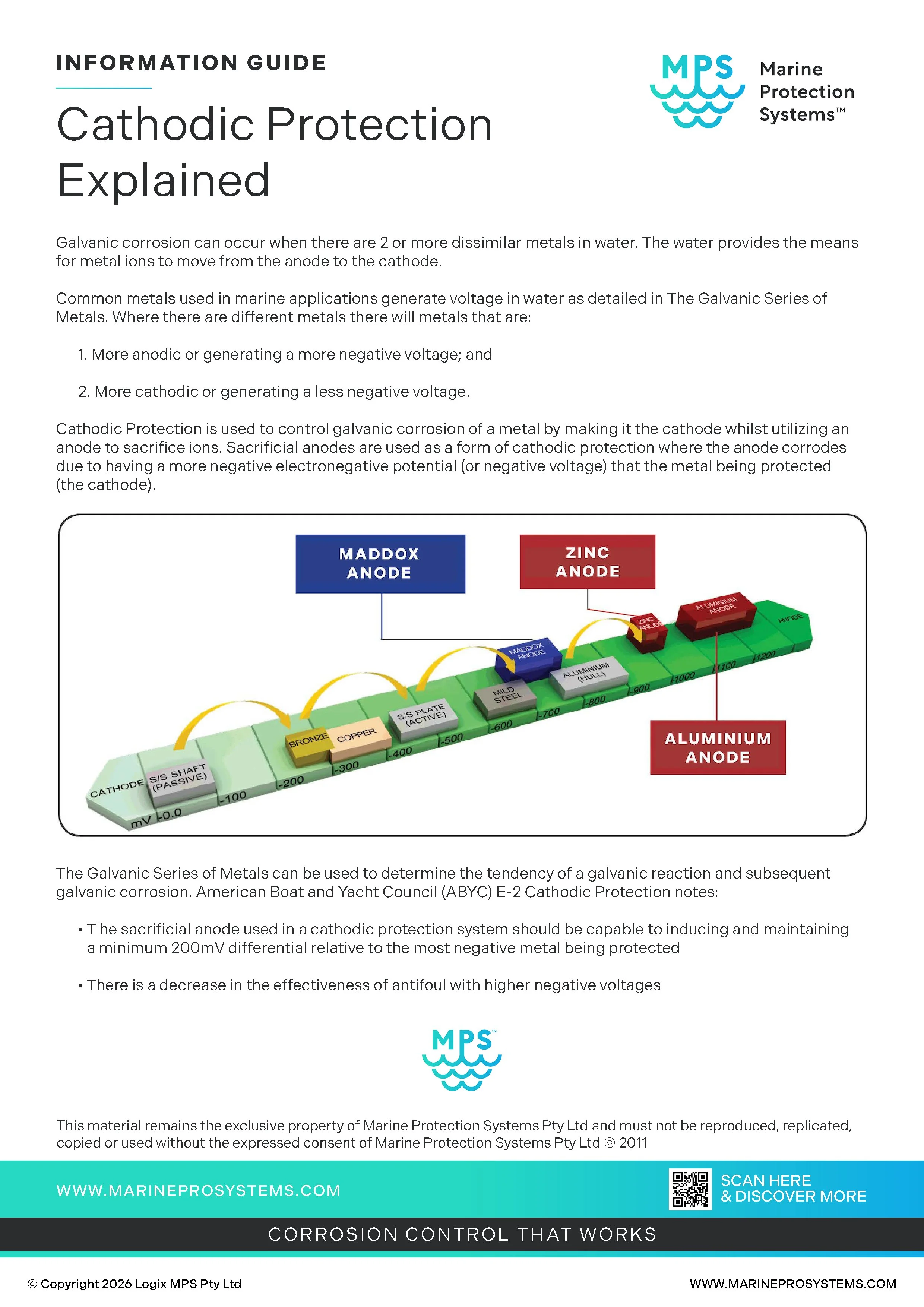
Cathodic Protection Explained
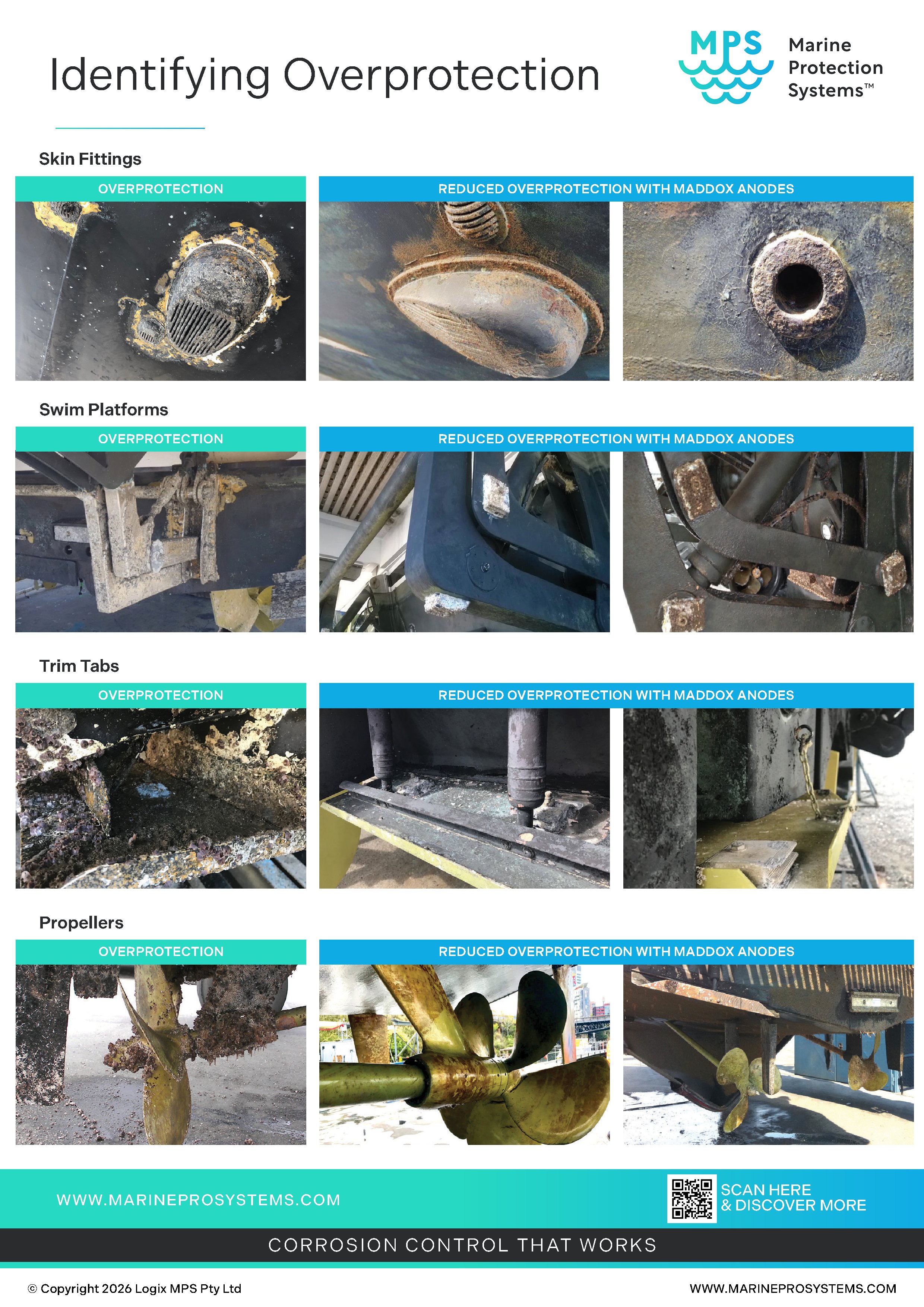
Identifying Overprotection
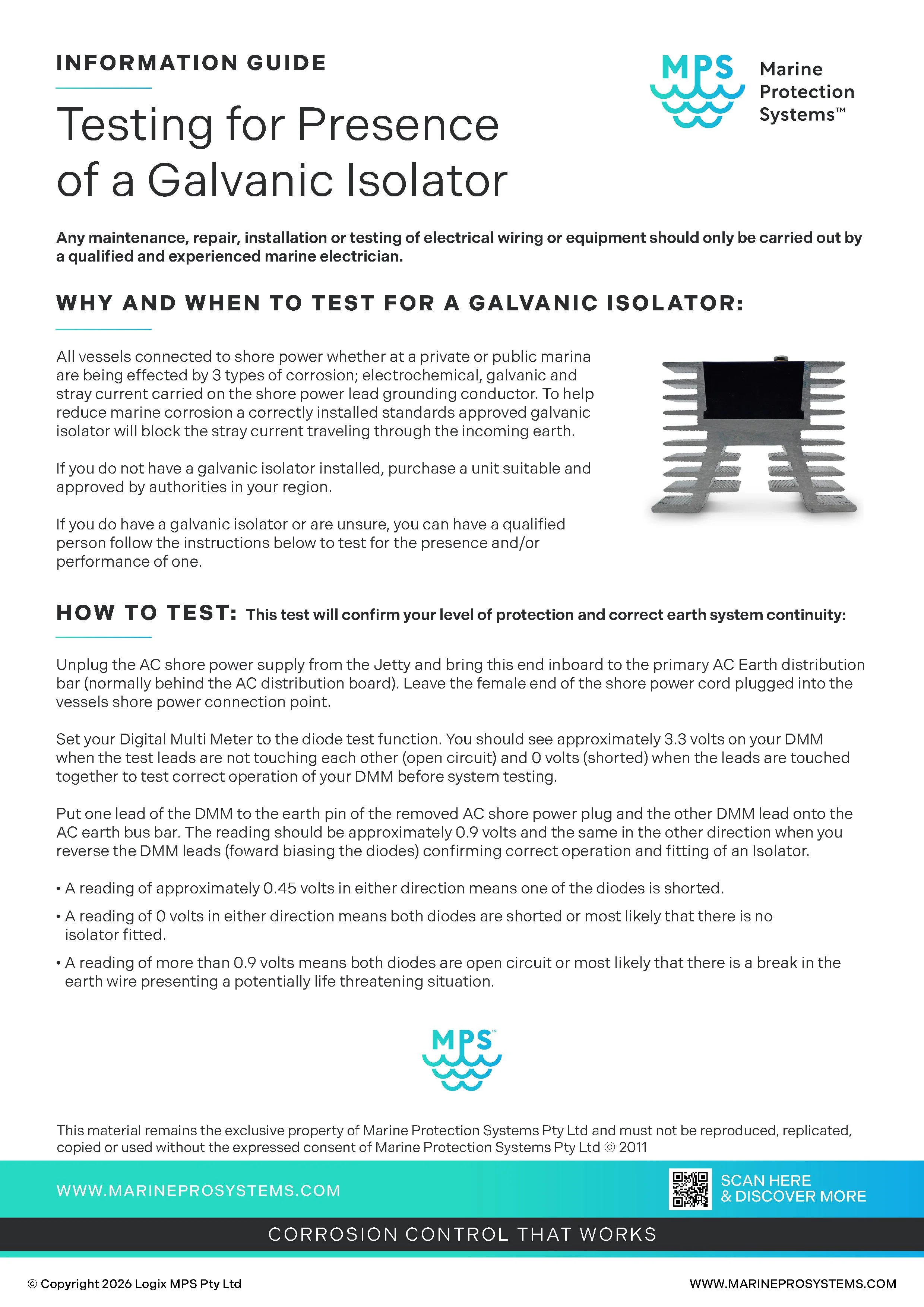
Testing for Presence of a Galvanic Isolator
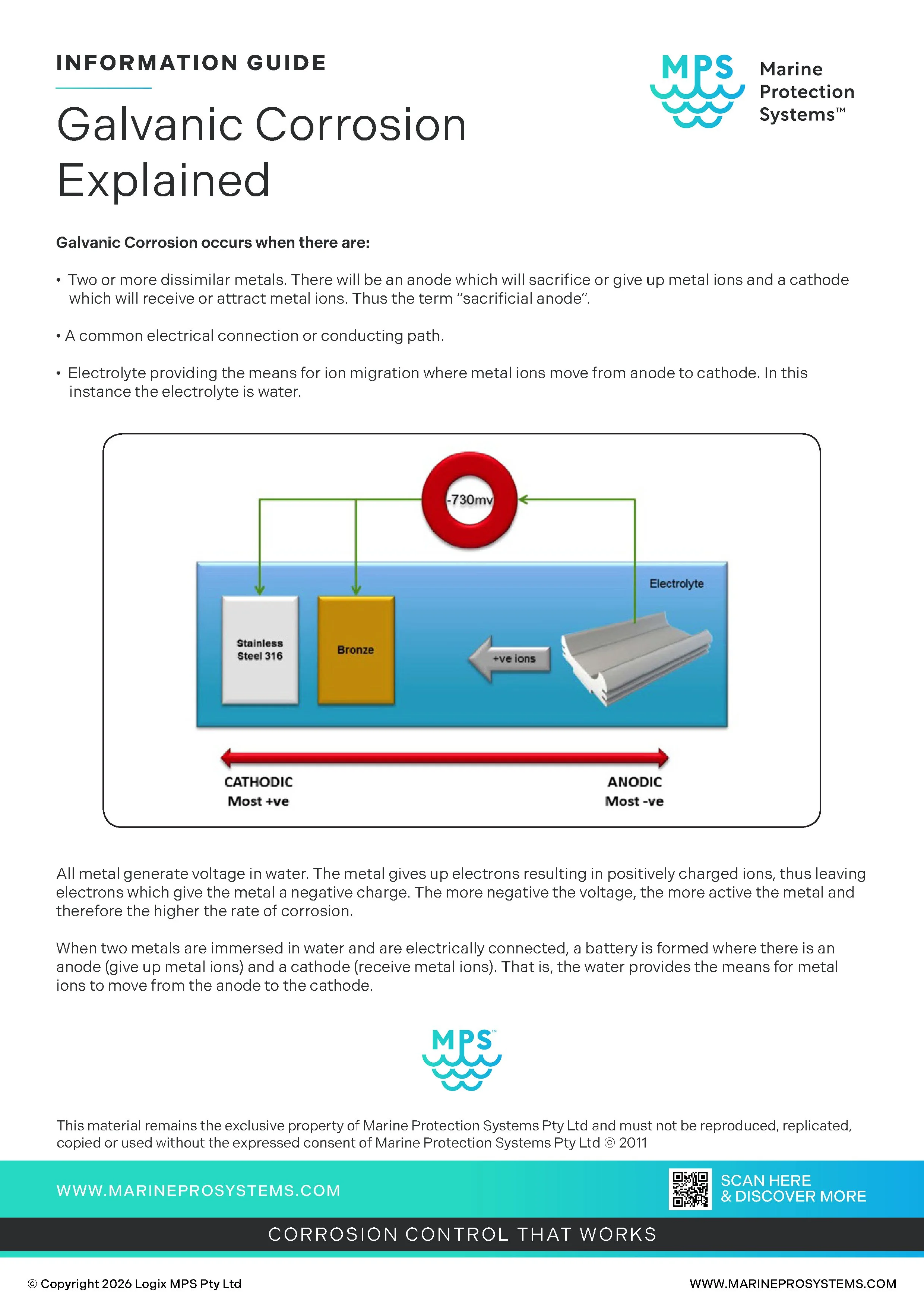
Galvanic Corrosion Explained
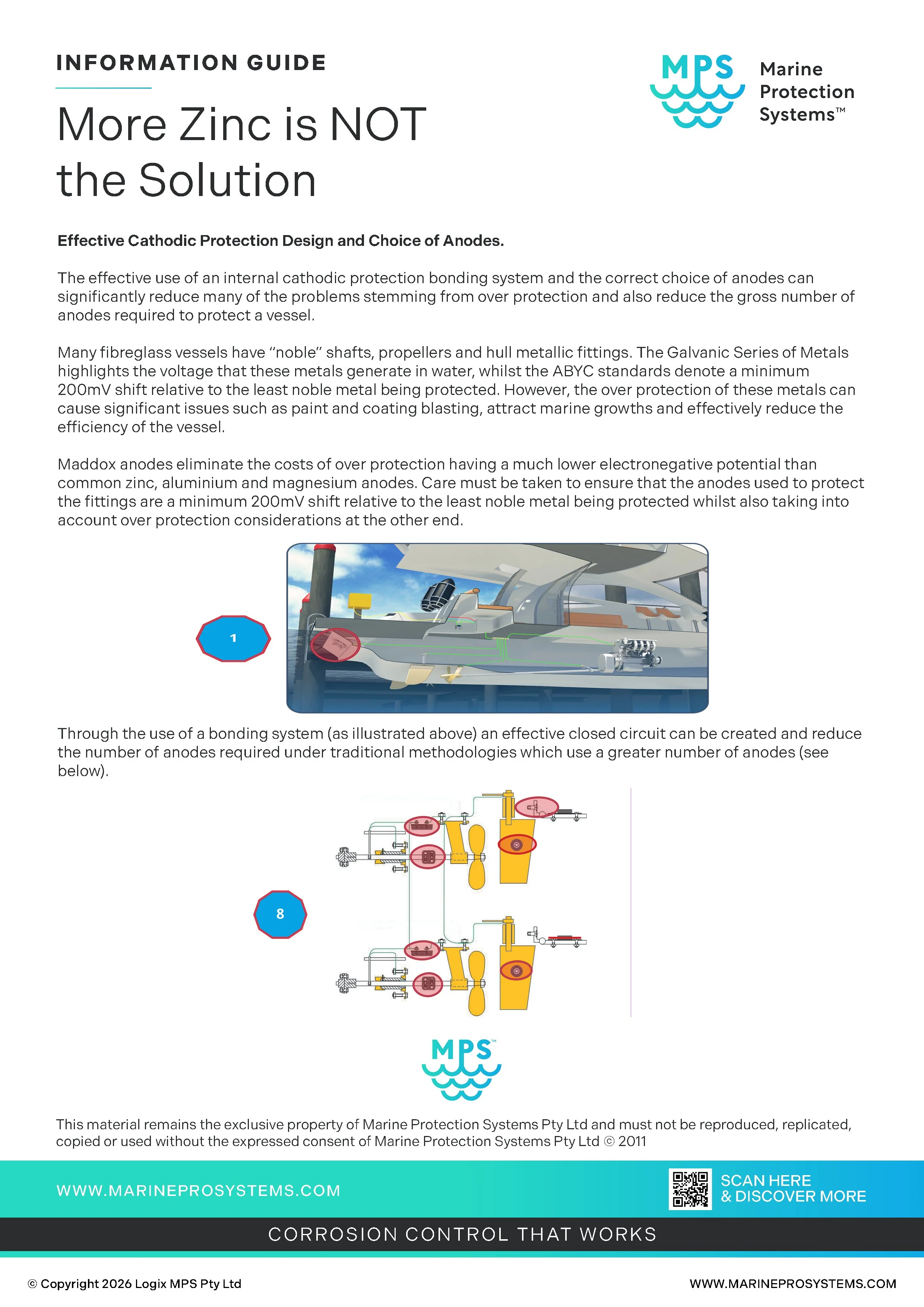
More Zinc Is NOT The Solution
Anode Guides
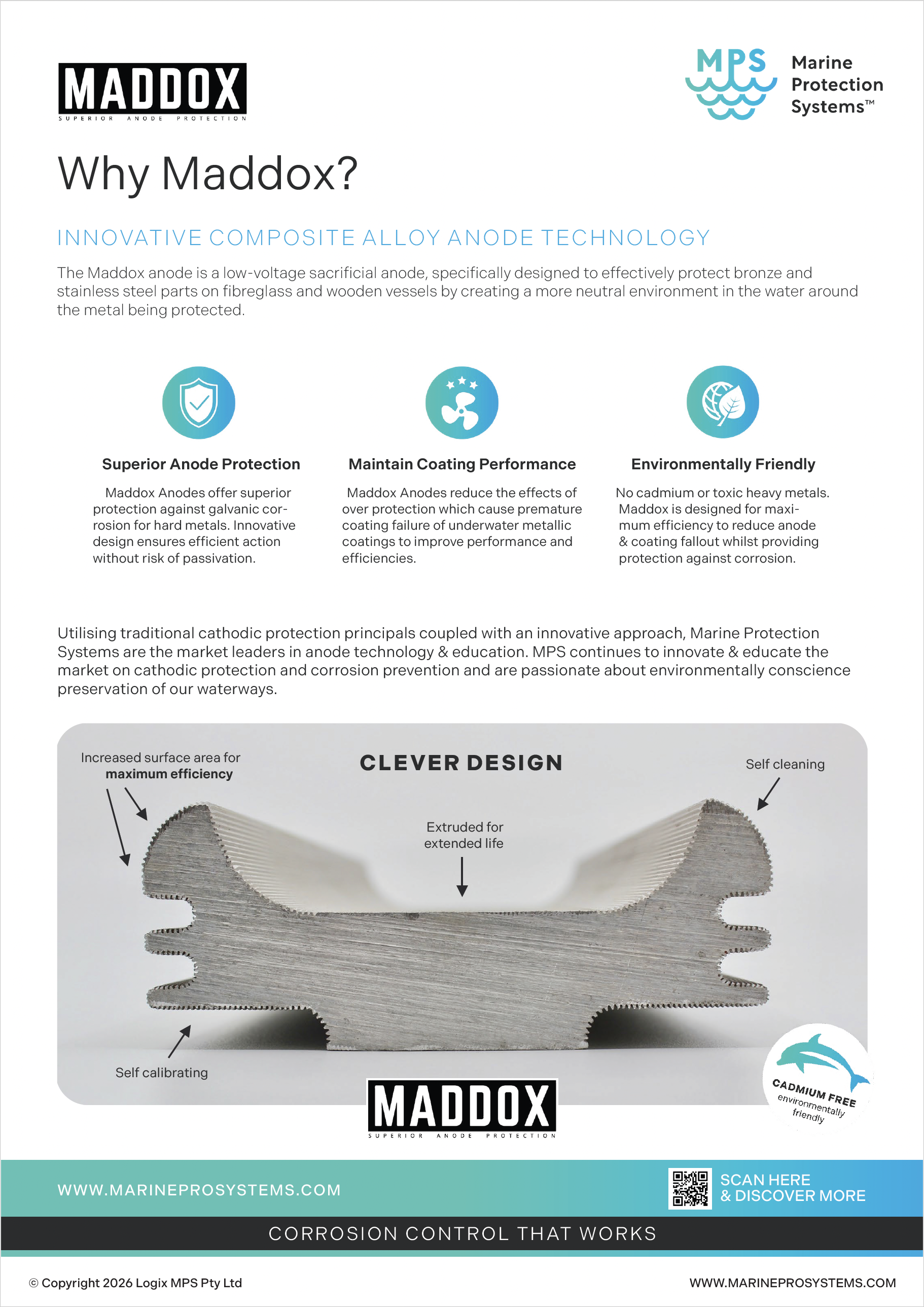
Why Maddox?
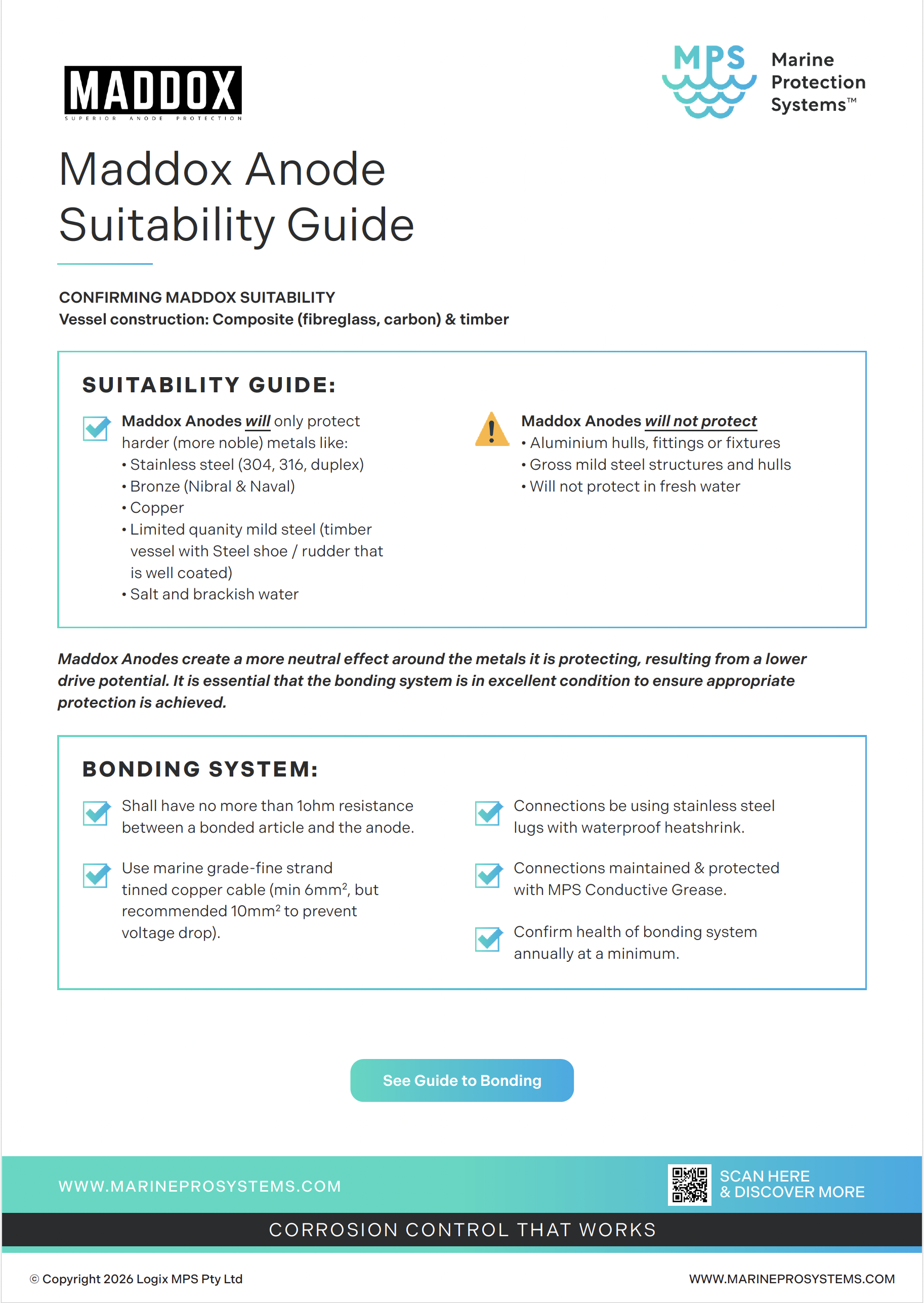
Maddox Anode Suitability Guide
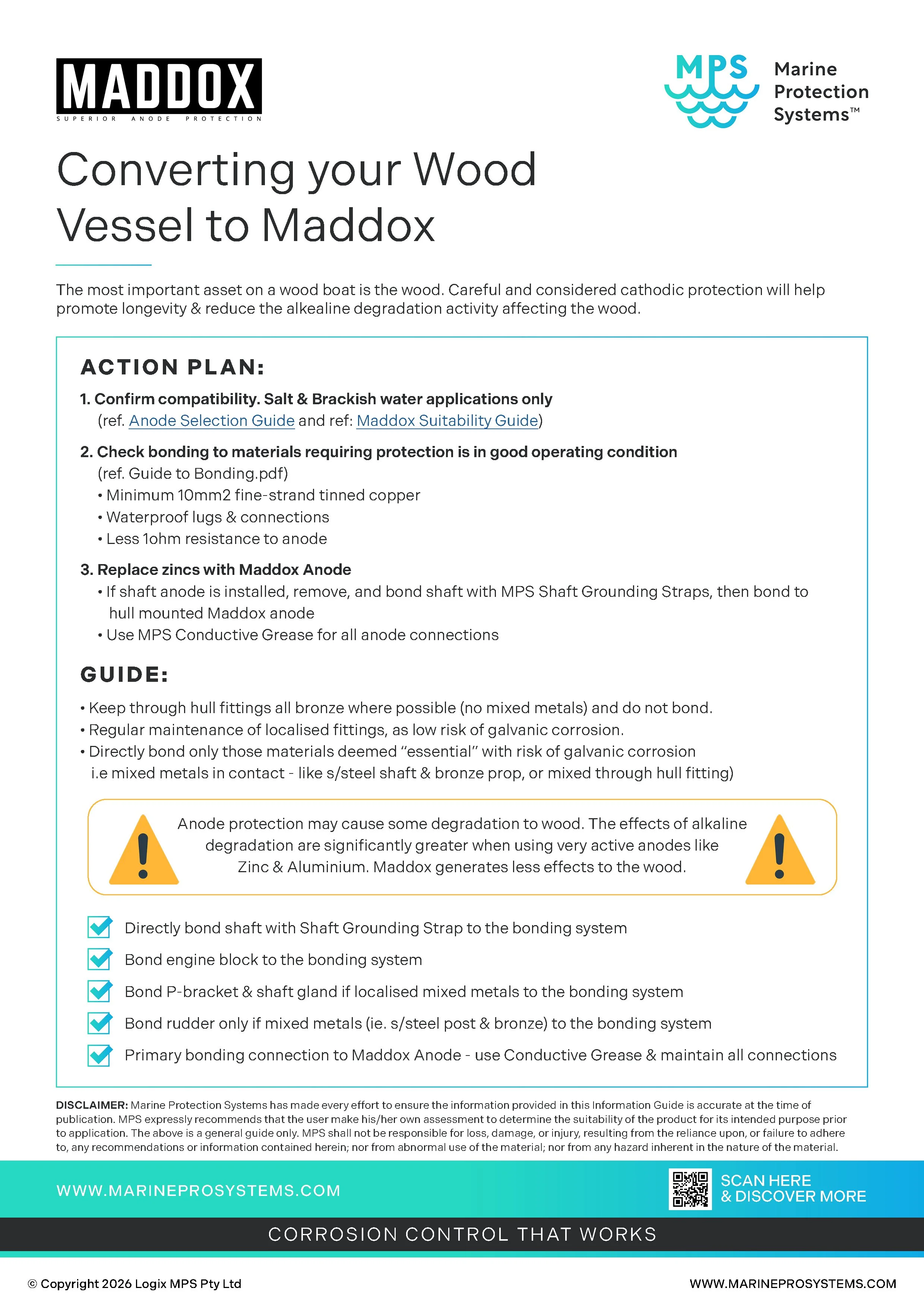
Converting Wood Vessels to Maddox
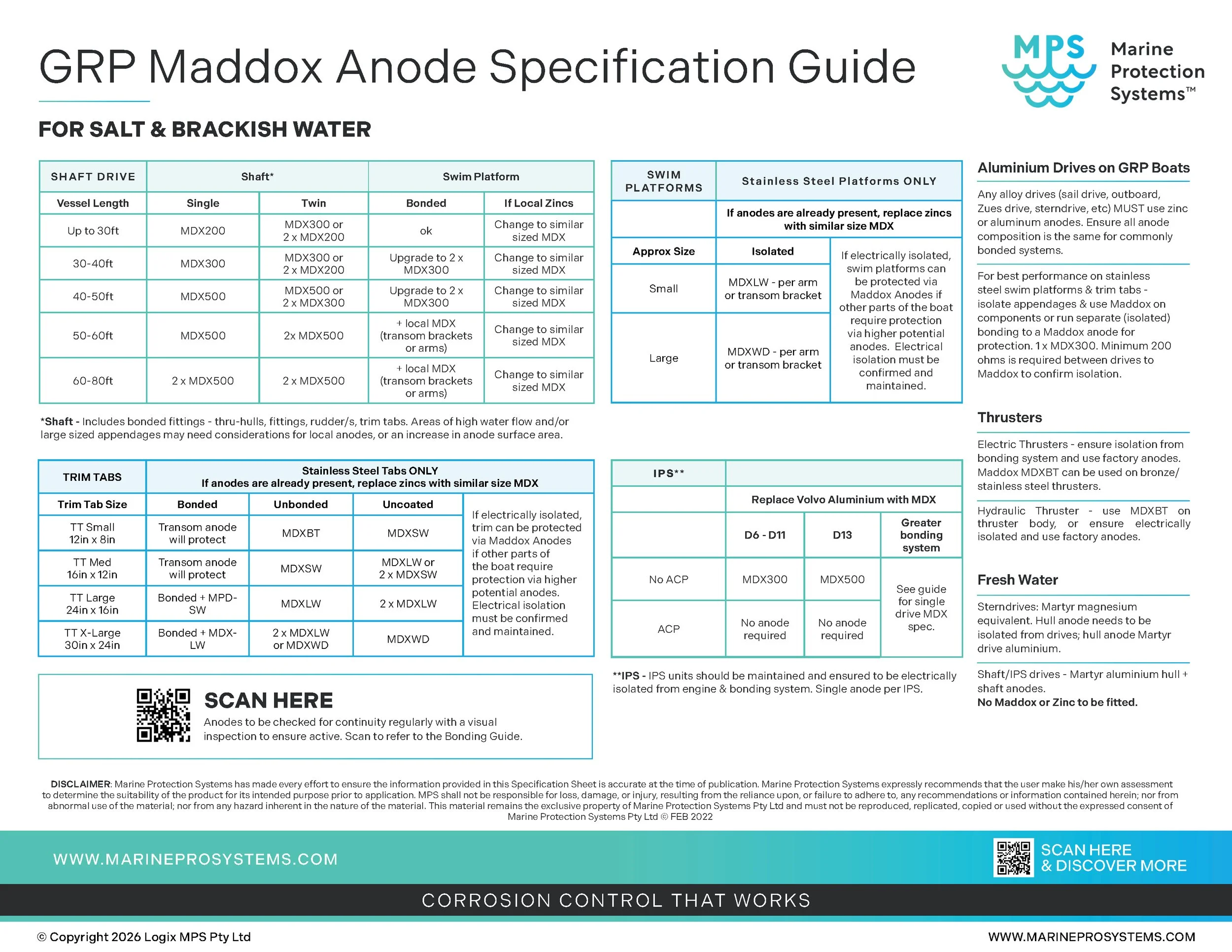
Maddox Anode Specification Guide
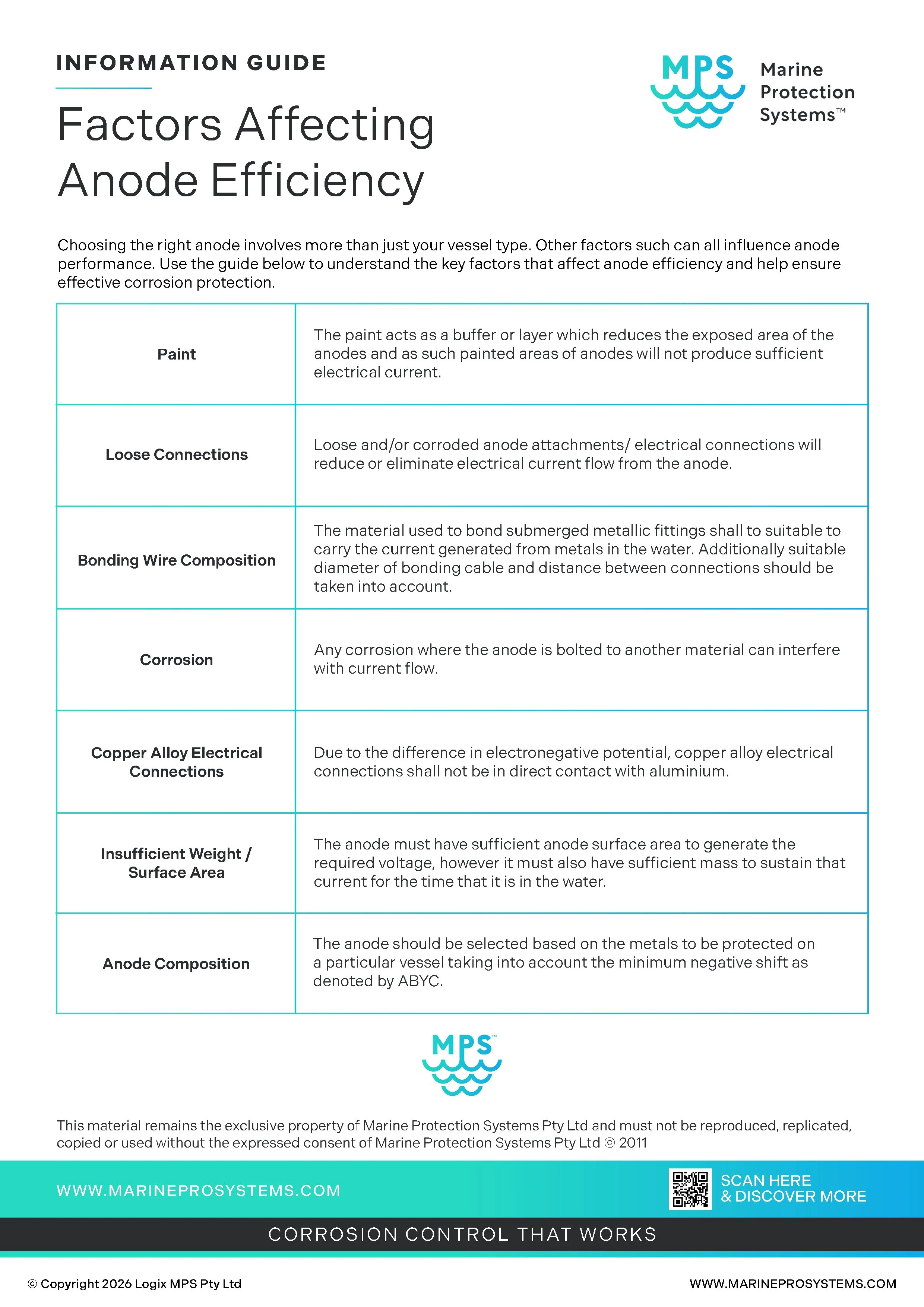
Factors Affecting Anode Efficiency
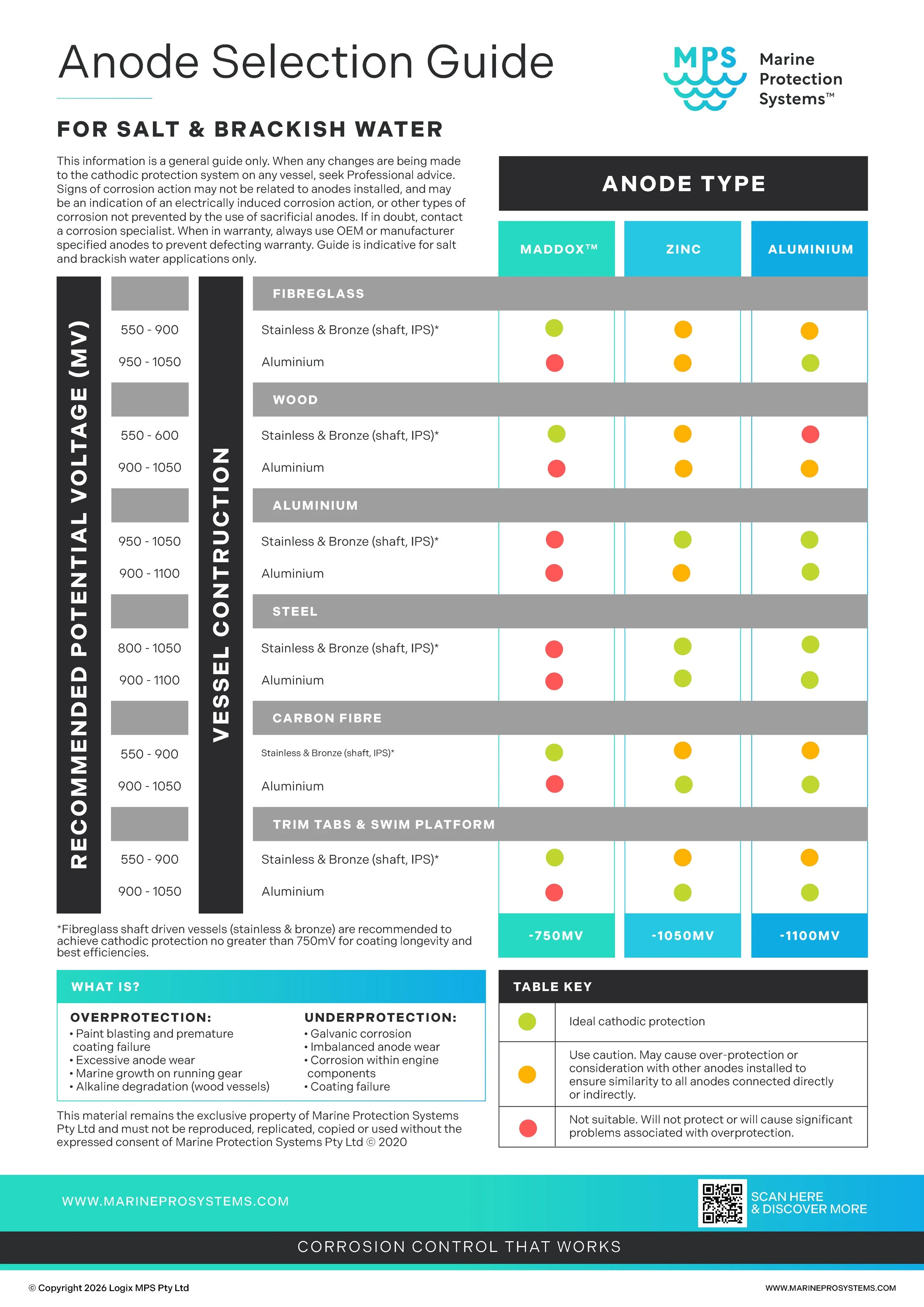
Anode Selection Guide
Converting Composite Motor Cruiser to Maddox
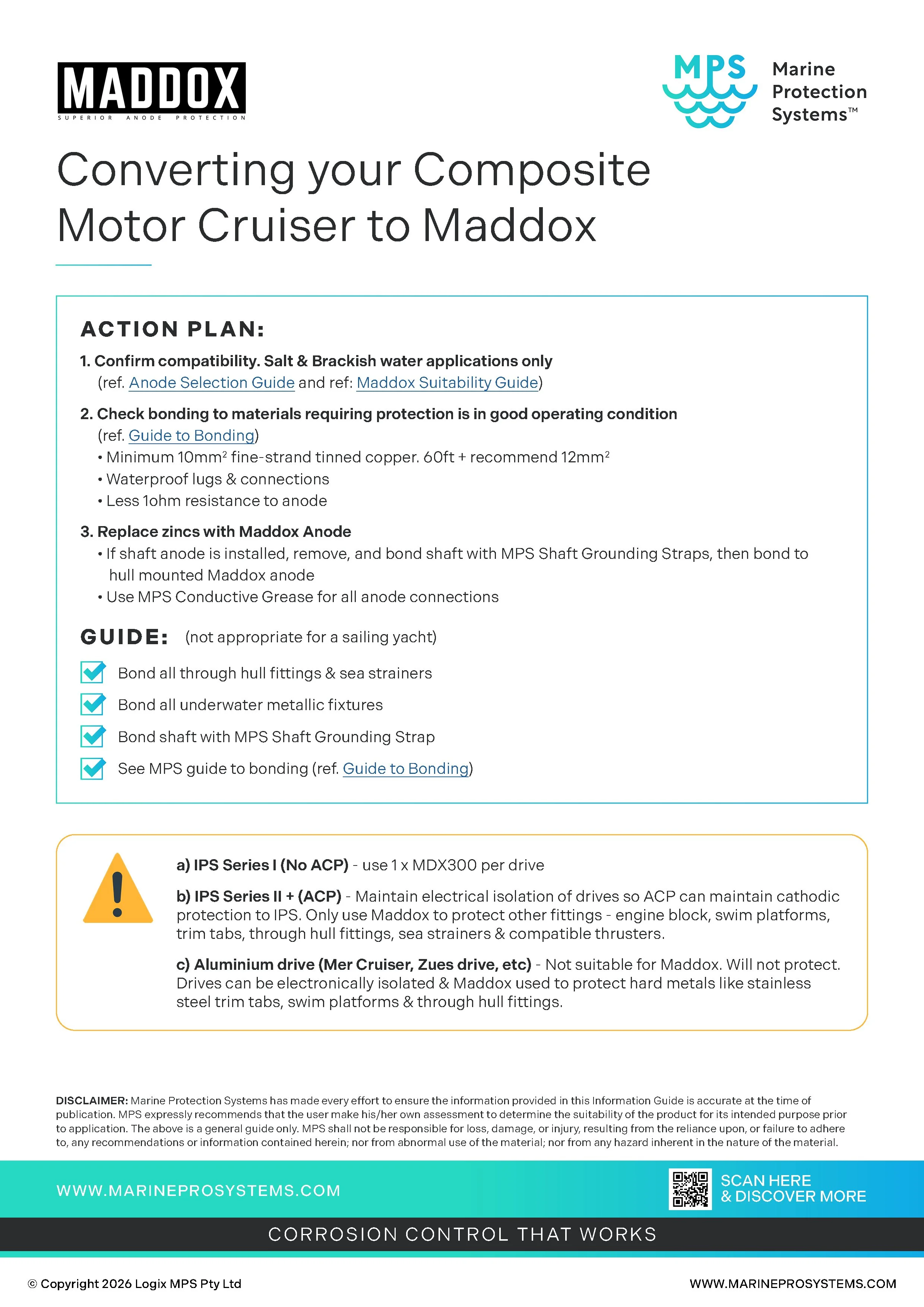
Installation Instructions
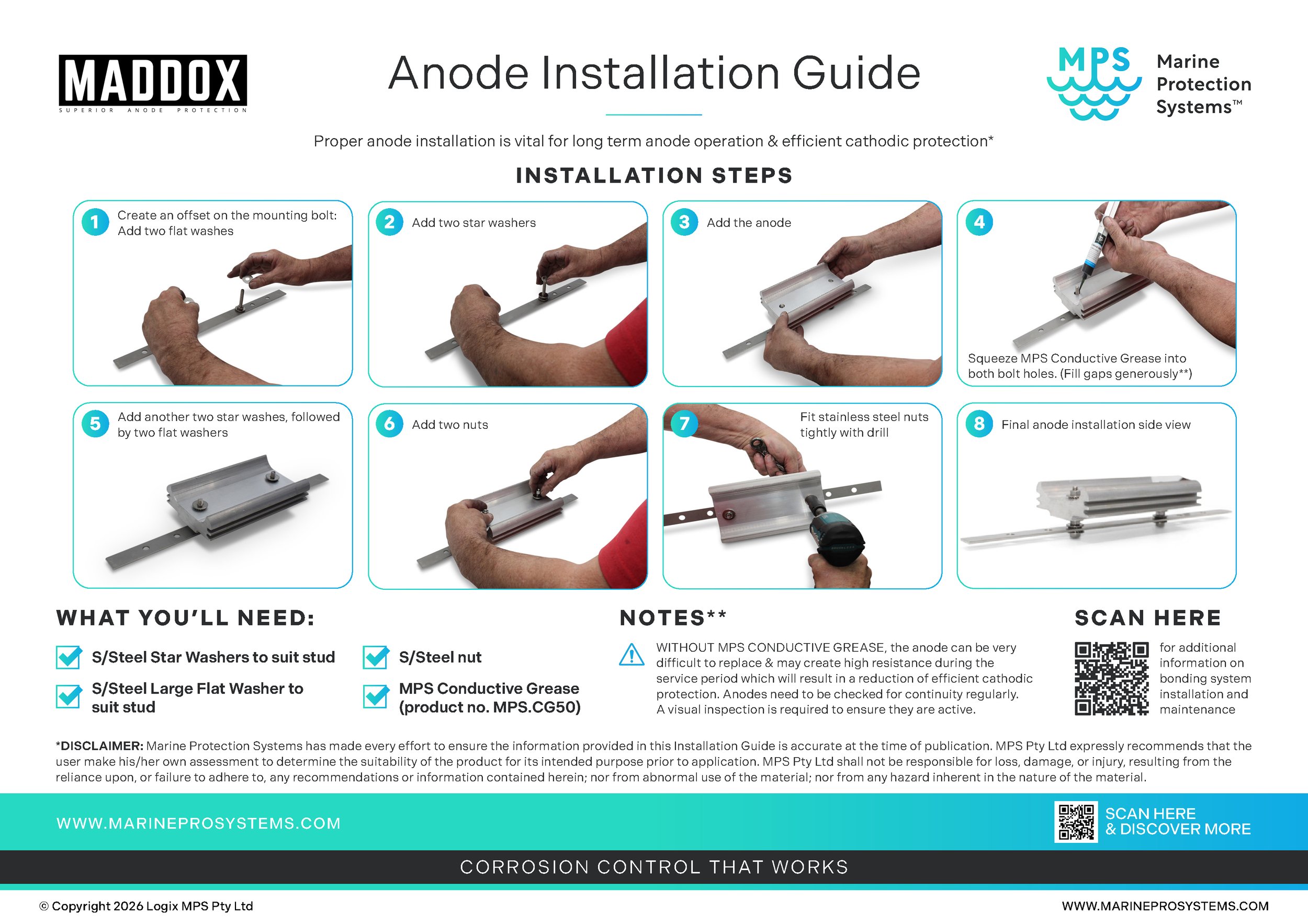
Maddox Installation Guide
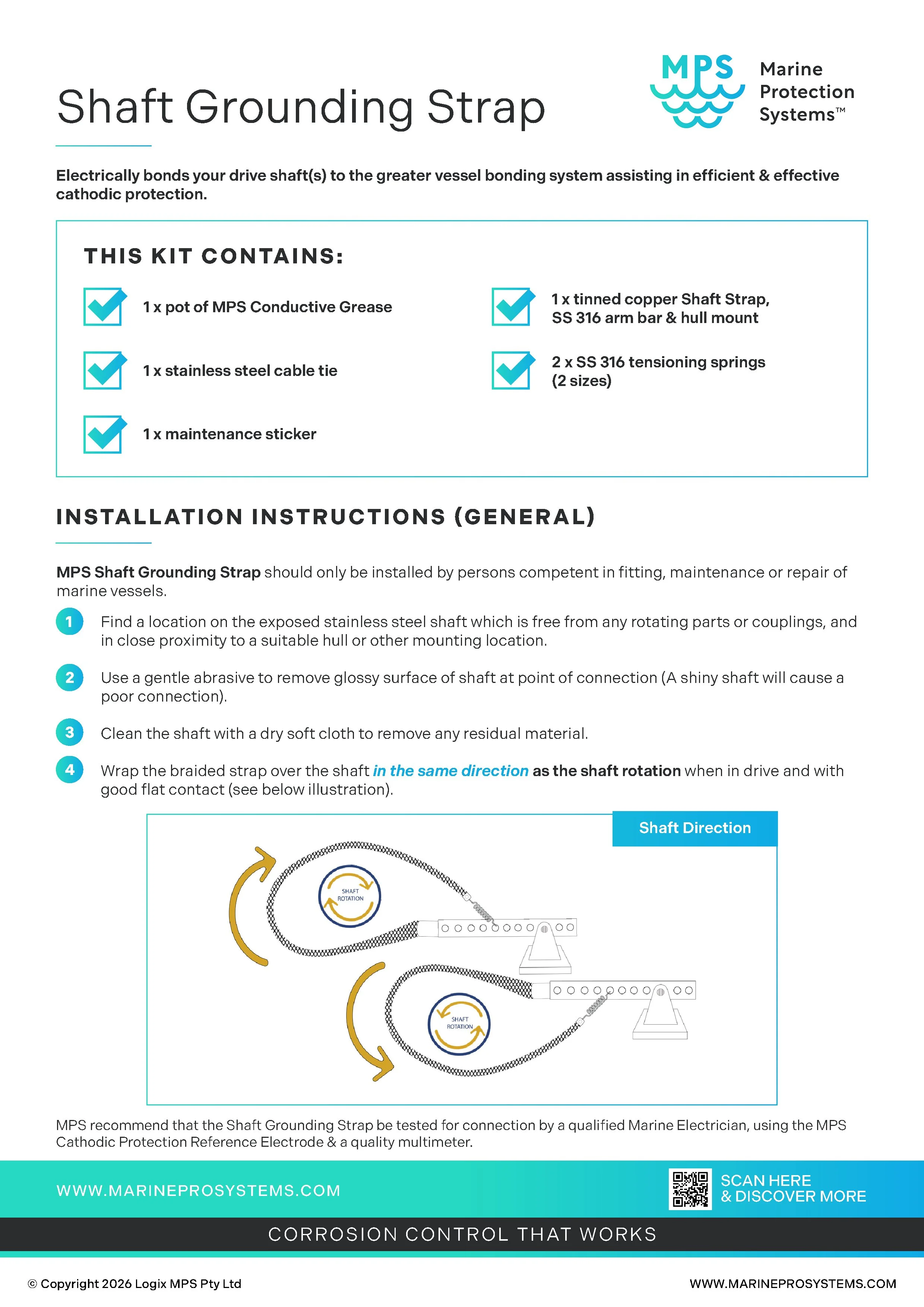
Shaft Grounding Strap Installation
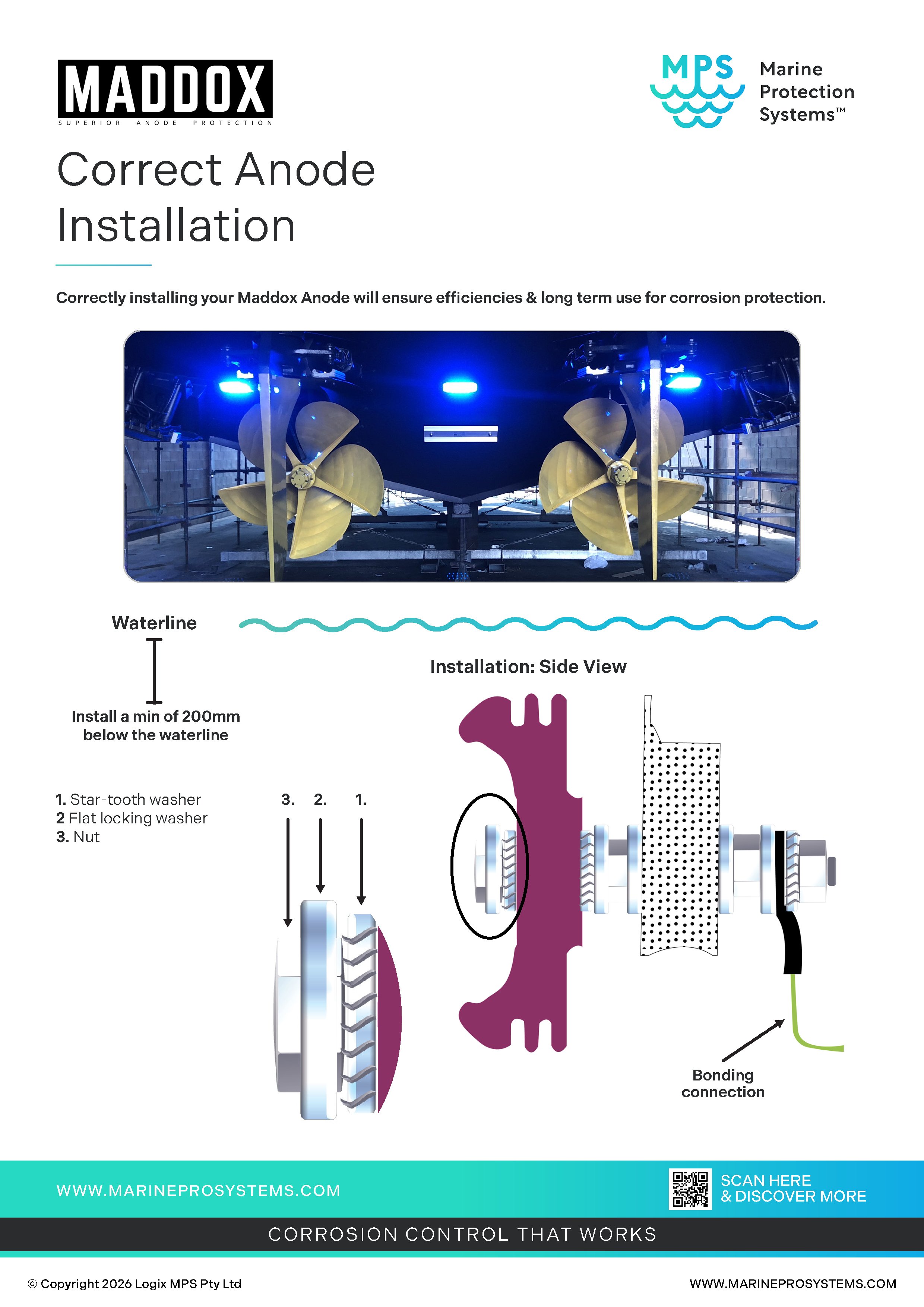
Correct Anode Installation
Frequently Asked Questions
Explore our Frequently Asked Questions by category to quickly find the information you need. Whether you're looking to better understand marine corrosion, troubleshoot a corrosion problem, or find the right MPS solution for your vessel, our expert answers are here to help. Browse Corrosion Explained, Corrosion Problems & Troubleshooting, and MPS Products & Solutions to get started.
Corrosion Explained
Learn the basics of marine corrosion and how protection systems work.
-
Galvanic Corrosion is an electrochemical reaction that causes electrons to flow from one metal to another metal, within the same electrolyte. The more active metal (anode) will deplete and essentially electroplate the more passive metal (cathode) with the anode material to achieve parity. A sacrificial anode is introduced into a combination of metals in order to provide the most active metal to protect all others.
-
Electrolysis is broadly referred to as an electrical influence causing a reaction between an anode and a cathode. In the world of boats, electrolysis is generally referring to the effect of electrical stray currents on metallic components resulting in aggressive corrosion activity. This type of corrosion can bypass anode and directly cause aggressive corrosion.
-
Stray current corrosion is one of the most aggressive forms of marine corrosion. It occurs when unwanted electrical current escapes from a vessel or nearby electrical source and passes through the water, causing underwater metal components to corrode much faster than normal.
Common signs include rapid anode consumption, severe corrosion on propellers, shafts or other underwater metals, and recurring corrosion problems. If you suspect stray current corrosion, it's important to identify and fix the source of the electrical fault rather than simply replacing damaged parts.
Learn more in our Knowledge Centre or contact the MPS team. If a professional investigation is required, LOGIX Consulting can provide expert corrosion diagnostics and tailored solutions.
-
Cathodic Disbondment occurs when a large potential difference (voltage) occurs between the cathode (protected metal) and the anode. The high drive potential essentially drives off coatings, resulting in coating failure and high levels of marine growth. Maddox Anodes combat this problem by supplying a lower potential anode that has less potential to affect a coating.
-
Corrosion isn't always obvious, but early detection can help prevent costly damage. Common signs include excessive or uneven anode wear, pitting or discolouration on underwater metals, coating or paint failure, corrosion on propellers or shafts, and recurring corrosion problems while berthed in a marina.
If you notice any of these signs, don't ignore them. Inspect your vessel's corrosion protection system, use our Anode Selector to check you're using the right anode, or explore our Knowledge Centre for practical guidance. If the problem persists or you're unsure of the cause, contact MPS for product advice or LOGIX Consulting for professional corrosion diagnostics and tailored recommendations.
-
Cathodic protection is a technique used to prevent galvanic corrosion of metals, especially in marine environments. It works by making the metal that needs protection act as the cathode in an electrochemical cell, while a more easily corroded metal (the sacrificial anode) is used to absorb the corrosive effects. The sacrificial anode, such as zinc or aluminum, corrodes instead of the protected metal, thereby extending the life of structures like boat hulls or underwater pipelines.
This method relies on the difference in voltage between metals, as described in the Galvanic Series, to ensure the anode corrodes preferentially.
Corrosion Problems & Troubleshooting
Identify common issues, understand warning signs, and find practical solutions.
-
Anodes naturally wear over time as they protect your vessel from corrosion. However, if they're disappearing unusually fast, it could indicate a more serious issue such as stray current, galvanic corrosion, incorrect anode selection, or an electrical fault.
Regular inspections are essential to ensure your corrosion protection system is working effectively. If you're concerned about excessive anode wear, explore our Knowledge Centre, use our Anode Selector to check you're using the right anode, or contact the MPS team for expert advice and tailored recommendations.
-
Anodes should gradually wear over time as they protect your vessel from corrosion. If they show little or no wear, they may not be providing effective protection. This can be caused by poor electrical continuity, incorrect installation, an unsuitable anode type, or other issues within the vessel's corrosion protection system.
If your anodes aren't wearing as expected, inspect your corrosion protection system and ensure the correct anodes have been installed. If you're unsure, contact the MPS team for expert advice and tailored recommendations.
-
Propeller corrosion can be caused by galvanic corrosion, stray current corrosion, inadequate cathodic protection, incorrect anode selection, or poor electrical bonding. Left untreated, it can lead to costly repairs and reduced performance.
Start by checking that your vessel has the correct anodes and that they're in good condition using our Anode Selectoror Anode Selection Guide. If corrosion continues or appears severe, contact MPS for product advice or LOGIX Consulting for a professional corrosion assessment to identify the root cause and recommend the right solution.
-
Marinas can increase the risk of corrosion due to shared electrical systems, shore power connections, neighbouring vessels, and varying water conditions. If your vessel's corrosion protection system isn't correctly designed or maintained, these factors can accelerate corrosion.
Check that your anodes are appropriate for your vessel, inspect your corrosion protection system regularly, and consider whether an MPS Electrolysis Blocker is suitable if you use shore power. If corrosion persists or you're unsure of the cause, contact MPS for product advice or LOGIX Consulting for professional corrosion diagnostics and tailored recommendations.
-
As a general guide, inspect your anodes every 3–6 months and always before and after extended trips or periods in the water. Regular inspections help ensure your corrosion protection system is working effectively and allow you to identify unusual wear before it leads to more serious problems.
If your anodes are wearing too quickly, not wearing at all, or you're unsure whether they're providing adequate protection, use our Anode Selector, explore the Knowledge Centre, or contact MPS for expert advice. For ongoing corrosion concerns, LOGIX Consulting can provide professional corrosion diagnostics and tailored recommendations.
-
A well-functioning corrosion protection system should provide consistent anode wear without excessive corrosion on your vessel's underwater metal components. If you notice rapid anode consumption, little or no anode wear, pitting, coating failure, or corrosion on propellers and shafts, your system may need attention.
Regular inspections are the best way to monitor performance. If you're unsure whether your vessel is adequately protected, explore our Knowledge Centre, use our Anode Selector, or contact MPS for product advice. For a comprehensive evaluation, LOGIX Consulting can carry out professional corrosion diagnostics and corrosion protection assessments.
Choosing the Right Solution
Explore MPS products and choose the best protection for your vessel.
-
Choosing the right anode depends on your vessel's construction, underwater components, and operating environment. Using the correct anode is essential for effective corrosion protection and long-term performance.
Start with our Anode Selector for a quick recommendation, or explore our Anode Selection Guide for more detailed information. If you're unsure or your vessel has a unique setup, contact the MPS team for expert advice—we're here to help you find the right solution.
-
A Maddox™ Anode is an advanced marine anode designed to provide effective corrosion protection for vessels with stainless steel and bronze underwater components, such as shaft-driven boats and IPS systems. Instead of allowing your vessel's valuable metal components to corrode, the anode gradually sacrifices itself to help protect them.
Use our Anode Selecor or Anode Selection Guide to find out if a Maddox™ Anode is right for your vessel. If you're unsure, contact the MPS team for expert advice and tailored recommendations.
-
The correct Maddox™ Anode size depends on your vessel's length, underwater metal components, and overall corrosion protection requirements. Choosing the right size helps ensure your vessel receives effective, long-lasting protection.
Use our Maddox Calculator for a quick recommendation or refer to the Maddox™ Sizing Guide for more detailed information. If you're unsure or your vessel has a unique configuration, contact the MPS team for expert advice and tailored recommendations.
-
In many cases, yes—but it depends on your vessel's construction and underwater components. Maddox™ Anodes are specifically designed for vessels with stainless steel and bronze running gear, such as shaft-driven boats and IPS systems, and are not suitable for every application.
Before changing anode types, find the right anode for your vessel by using our Anode Selector to determine the most suitable option for your vessel. You can also explore our Maddox™ product information to learn more about how they work. If you're unsure or your vessel has a unique configuration, contact MPS for expert advice before making any changes.
-
If your vessel has a shaft-driven propulsion system, a Shaft Grounding Strap can play an important role in your corrosion protection system. It helps maintain electrical continuity between the propeller shaft and the vessel's bonding system, supporting effective cathodic protection and reducing the risk of corrosion caused by poor shaft grounding.
If you're unsure whether your vessel requires a Shaft Grounding Strap, explore our theMPSShaft Grounding Strap to learn more. For vessel-specific advice or corrosion concerns, contact MPS for expert guidance or LOGIX Consulting for a professional corrosion assessment.
-
MPS does not produce shaft anodes with Maddox™ composition to maximise efficiency and reliability. Shaft anodes can loosen, cause mechanical damage, contribute to cavitation, and affect propeller efficiency and coatings.
Instead, MPS recommends a Shaft Grounding Strap, which provides a reliable electrical connection between the propeller shaft and the vessel's bonding system, allowing the Maddox™ Anode to perform as designed.
Learn more about our Shaft Grounding Strap and Maddox™ Anodes, or contact MPS if you're unsure which solution is right for your vessel.
-
An MPS Electrolysis Blocker, also commonly known as a Galvanic Isolator, is designed to help reduce the risk of electrically induced corrosion when your vessel is connected to shore power in a marina. It works by blocking low-voltage DC currents that can contribute to corrosion while still allowing your vessel's AC safety grounding system to operate correctly.
If your vessel is regularly connected to shore power, an Electrolysis Blocker (Galvanic Isolator) can be an important part of your overall corrosion protection system. Learn more on our Electrolysis Blocker. If you're unsure whether this solution is right for your vessel, contact MPS for expert advice.
-
If your vessel is regularly connected to shore power in a marina, an Electrolysis Blocker or Galvanic Isolator is highly recommended. Shore power connections can introduce low-voltage DC currents through the grounding system, increasing the risk of electrically induced corrosion on your vessel's underwater metal components.
An MPS Electrolysis Blocker helps reduce this risk while maintaining the integrity of your AC safety grounding system. Learn more on our Electrolysis Blocker on our Products page. If you're unsure whether your vessel would benefit from an Electrolysis Blocker, contact MPS for expert advice.
-
A Reference Electrode is used to measure the effectiveness of your vessel's corrosion protection system. It monitors the electrical potential of your underwater metal components, helping determine whether they're receiving adequate cathodic protection and allowing corrosion issues to be identified before significant damage occurs.
Reference Electrodes are commonly used for corrosion monitoring, diagnostics, and routine system checks on both recreational and commercial vessels. Learn more on our Reference Electrode on our product page. If you need help assessing your vessel's corrosion protection, contact MPS for product advice or LOGIX Consulting for professional corrosion diagnostics.
-
Regular corrosion monitoring helps ensure your vessel's protection system is performing as intended and can identify potential issues before they become costly repairs. Monitoring can detect changes in protection levels, excessive or insufficient anode performance, stray current activity, and other corrosion risks that may not be visible during a routine inspection.
For periodic monitoring, explore our Reference Electrode on our products page. If you're looking for continuous, real-time corrosion monitoring, keep an eye out for MarineLinx™, MPS's upcoming smart corrosion monitoring solution. Contact MPS for expert advice.
-
Many MPS products are designed to work together as part of a complete corrosion protection system. Depending on your vessel, this may include the correct anodes, a Shaft Grounding Strap, an Electrolysis Blocker (Galvanic Isolator) for shore power protection, and a Reference Electrode for corrosion monitoring. Together, these products help provide more effective and reliable protection for your vessel's underwater metal components.
Not sure which combination is right for your vessel? Use our Anode Selector, explore our Knowledge Centre, or contact MPS for expert advice. If you require a vessel-specific corrosion assessment, LOGIX Consulting can provide professional diagnostics and tailored recommendations.
-
Many MPS products can be installed by a competent boat owner or marine technician by following the appropriate installation instructions. However, correct installation is essential to ensure your corrosion protection system performs as intended.
We recommend referring to the relevant Installation Guide and product information before installation. If you're unsure or your vessel has a complex electrical or corrosion protection system, contact MPS for guidance or LOGIX Consulting for professional advice and technical support.
-
Every vessel is different, and the right corrosion protection solution depends on factors such as vessel construction, underwater components, operating environment, and electrical systems.
A great place to start is with our Anode Selector, our Maddox Calculator, and the Knowledge Centre page, where you'll find practical guidance, technical resources, and product information. If you're still unsure or your vessel has a unique configuration, contact MPS for expert product advice. For complex corrosion issues, diagnostics, surveys, or technical assessments, LOGIX Consulting can provide tailored professional solutions.
Need Expert Advice?
Can't find the answer you're looking for? Whether you need help choosing the right MPS products, investigating a corrosion issue, or improving your vessel's corrosion protection, our team is here to help. We also provide professional corrosion diagnostics, technical consulting, and customised training through LOGIX Consulting.